
 A member of Dales Academies Trust


At Carnagill, good mental health and well-being is our top priority as we believe children will only thrive academically when they feel safe and secure. From the moment they enter our school site every morning, staff are on hand to welcome, to support and reassure. The strong relationships this creates are paramount to establishing the trust and confidence that someone will always be there to listen.
Our Learning Mentor and Nurture Room provide time and space to talk either in small groups or one-to-one, and work is planned to help children develop the skills they need to begin to regulate themselves.
As always, if there is anything we can do to support you, please do not hesitate to get in touch.
To find out more, read our Mental Health and Well-being policy.
Our Mental Health and Wellbeing lead is Louise Newport and our Mental Health and Wellbeing champion is Sarah Bradshaw.
Nurture
At Carnagill Primary School, we recognise that for our pupils to progress academically, they need to be emotionally and socially secure.
The school follows the 6 Nurture Principles:
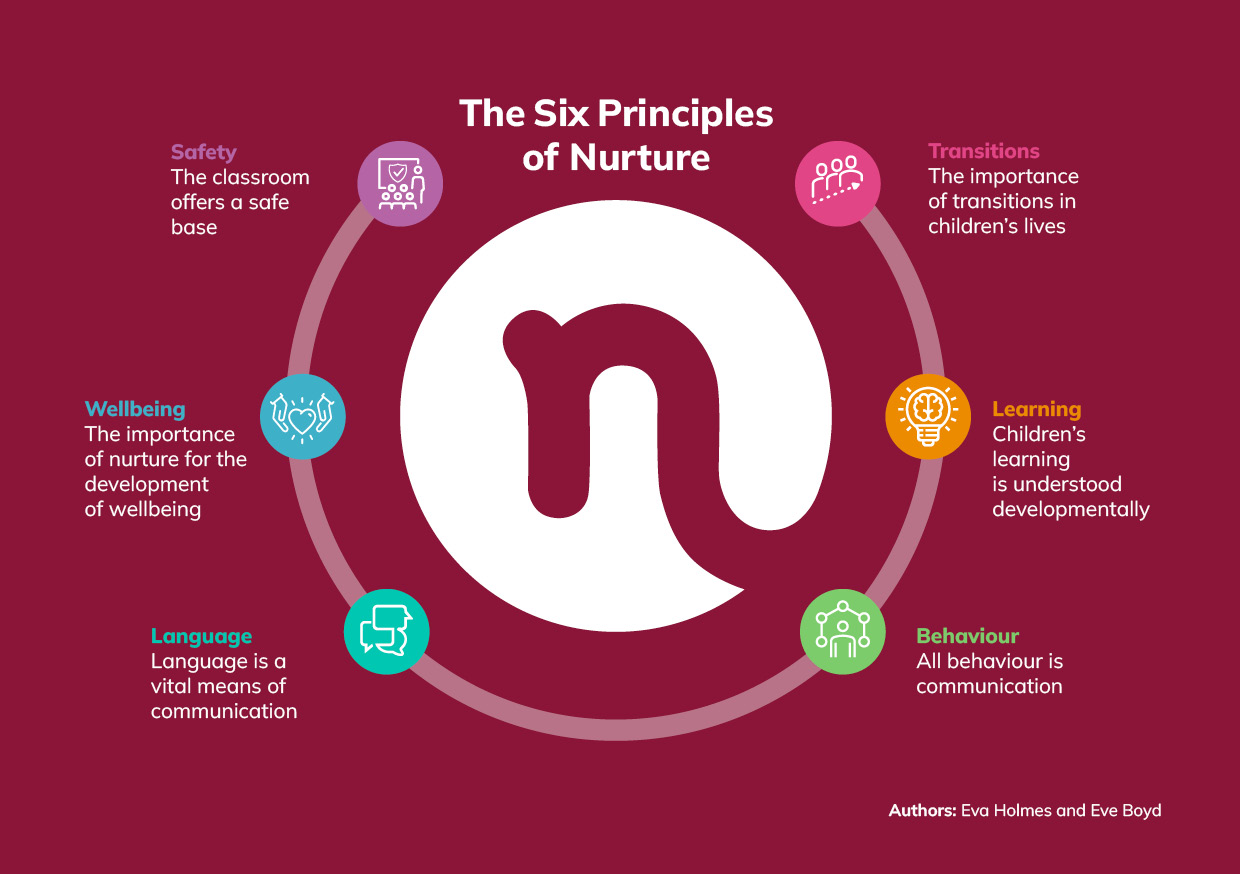
The school’s nurture provision is overseen by the Senior Leadership Team, SENCO and Learning Mentor. The provision ensures that all space in school are safe and calm areas to support pupils in their access to the National Curriculum.
All children know they will be listened to and supported based on their individual needs. Children in school have access to a range of supportive, nurturing programmes which are delivered by school staff.
Relational Approach to Behaviour Management
Building relationships and understanding individual needs support pupils across school. Non-negotiables of daily meet and greet, remind in private/praise in public, unconditional positive regard and the ‘Kindness Principle’ ensures that relationships between adults and pupils are strong.
Calm and Caring Adults
All adults show understanding, care and empathy enabling pupils to feel safe and secure where their individual needs are met and understood.
Restorative Practice
Enables pupils to take responsibility for their own actions and giving them an awareness of how these actions impact on other people’s feelings. They learn to consider alternative options and make things ‘right’
Safe and Calm Areas
School provides a range of areas to meet children’s sensory and emotional needs; Nurture room, Nurture Nest (EY sensory room) and calm areas in all classes. This ensures pupils have a safe and quiet space to regulate their emotions and have their sensory needs met.
Soft Start Transition
Provision is in place for those pupils who struggle to make the transition from home to school. They receive a calm and supportive start to the school day in the Nurture room and helps the children to then engage in their learning.
Playtime and Lunchtime support
The ‘Den is open at lunchtime and playtime to provide an alternative to going outside. This offers pupils an opportunity to share their feelings and thoughts with a trusted adult. Just Dance is also offered at playtime to give an alternative physical activity to support sensory feedback.
Pastoral Support
Pastoral support is offered by all staff in classes and by the LEanring Mentor. This is offered dependent on individual need. Pastoral groups also offer more intensive support for emotional regulation and social skills.
Additional group support
Lego therapy, social skills groups, communication groups and self-esteem groups enable individual needs to be met so that all pupils feel that they can access their learning.
Useful Resources
For everyone
- Mind have comprehensive mental health resources for your own personal wellbeing, and also wellbeing in the workplace: https://www.mind.org.uk/information-support/coronavirus-and-your-wellbeing/
- NHS – Health A-Z (Mental Health), a whole range of audio guides and signposting to mental health helplines, support groups and expert advice. The website also allows you to put in your local postcode to find out what resources are close to you: www.nhs.uk
- Public Health England & NHS Every Mind Matters website – generic health and wellbeing information linked to the NHS: www.nhs.uk/oneyou/every-mind-matters
- Samaritans – if you are worried about your mental health during the coronavirus outbreak: https://www.samaritans.org/how-we-can-help/support-and-information/if-youre-having-difficult-time/if-youre-worried-about-your-mental-health-during-coronavirus-outbreak/
For Children / Young people
- NSPCC – Includes resources to support children with anxiety: nspcc.org.uk
- The Children’s Society: childrenssociety.org.uk
- Youth and wellbeing Directory: annafreud.org
- Take Time Out: youngminds.org.uk
- Support for Young People: themix.org.uk
- Action for Children mental health resources and information: www.actionforchildren.org.uk
- Childline mental health support and guidance: www.childline.org.uk
- Health Education England (in association with Young Minds have agreed a number of accessible on line modules) This is mainly for adults/family/carers in support of children’s mental health – free and accessible with no login required: www.minded.org.uk
- Local Children & Adolescent Mental Health (CAMHS) services: NHS local Access to Children & Young Peoples services: www.tewv.nhs.uk
- Charlie Waller Memorial Trust – Talking to children about feelings: Tips for parents and carers https://www.cwmt.org.uk/talking-about-feelings
- British Psychological Society – blogs, videos, webinars and advice on variety of issues that families might be experiencing due to Covid-19. https://www.bps.org.uk/coronavirus-resources/public
- These websites are excellent for supporting with bereavement: www.childbereavementuk.orgwww.childhoodbereavementnetwork.org.uk and www.winstonswish.org
